
Architectural • Interior Design • Specification-Ready
Architect & Designer Resources
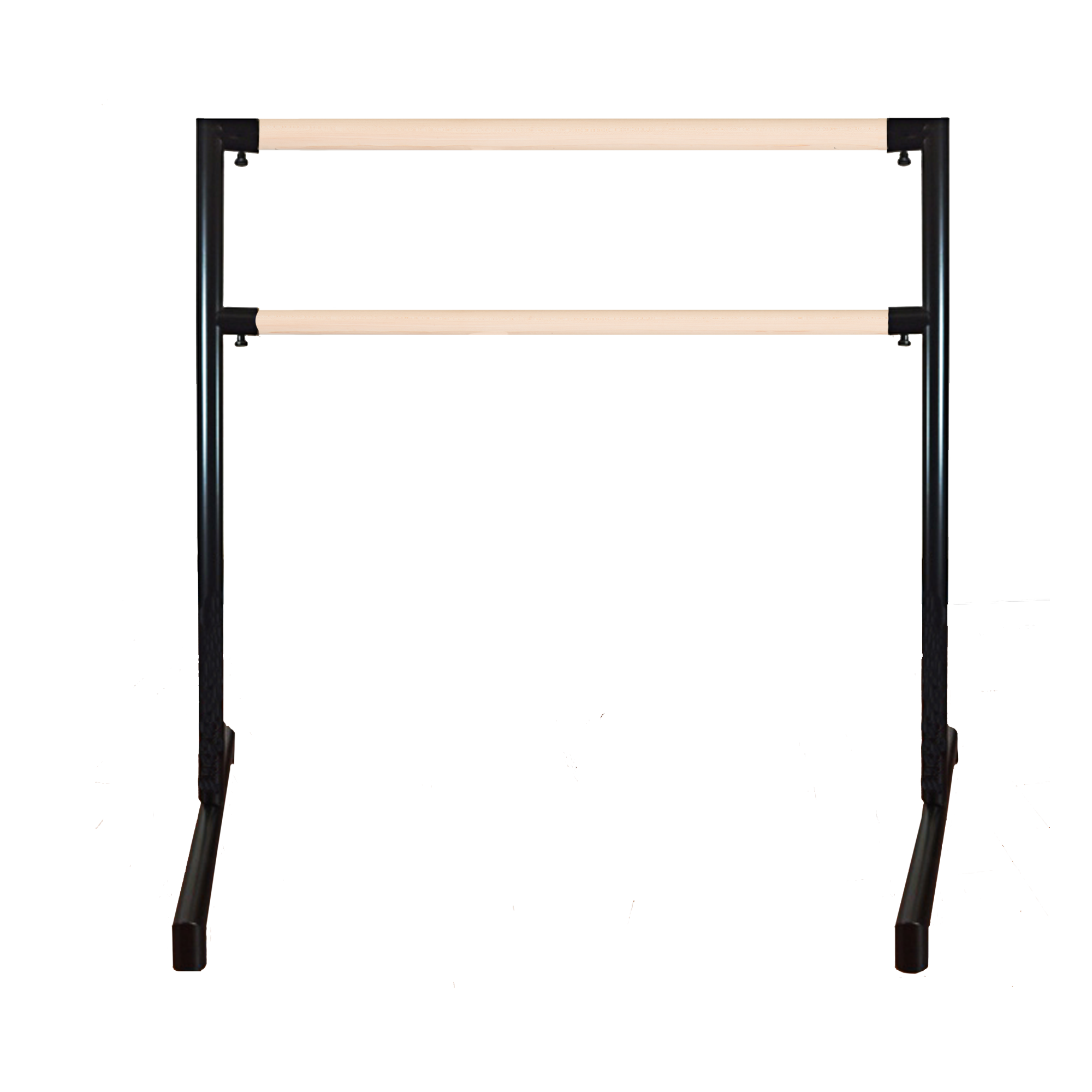
Commercial-grade ballet and rehabilitation barre systems engineered for architectural integration. Designed for institutional, healthcare, hospitality, and multi-location environments where dimensional clarity, structural integrity, and fabrication precision matter.
Selected Design & Development Collaborations



Specification & Coordination
- Dimensional alignment & layout planning
- Mounting substrate review (stud, steel, CMU, concrete)
- Blocking & structural reinforcement guidance
- Continuous run detailing
- Submittal-ready documentation upon request
Specialty Architectural Fabrication
Beyond commercial barre systems, Custom Barres provides precision specialty metal fabrication for architectural integrations, structural supports, branded installations, and refined interior metal elements.
Projects are evaluated individually and fabricated to specification using the same welding and finishing standards applied to our commercial systems.
Explore Custom Fabrication →Technical Considerations
- Recommended installation height standards
- Grip diameter specification ranges
- Wall clearance & ADA-aligned guidance
- Load-conscious mounting systems
- Multi-room & multi-location deployment planning
In-House Fabrication
- Precision TIG welding
- CNC machining & laser cutting
- Architectural-grade powder coating
- Custom bracket & mounting development
- Refined structural metal integration
Architect Reference
Load Capacity & Base Plate Performance
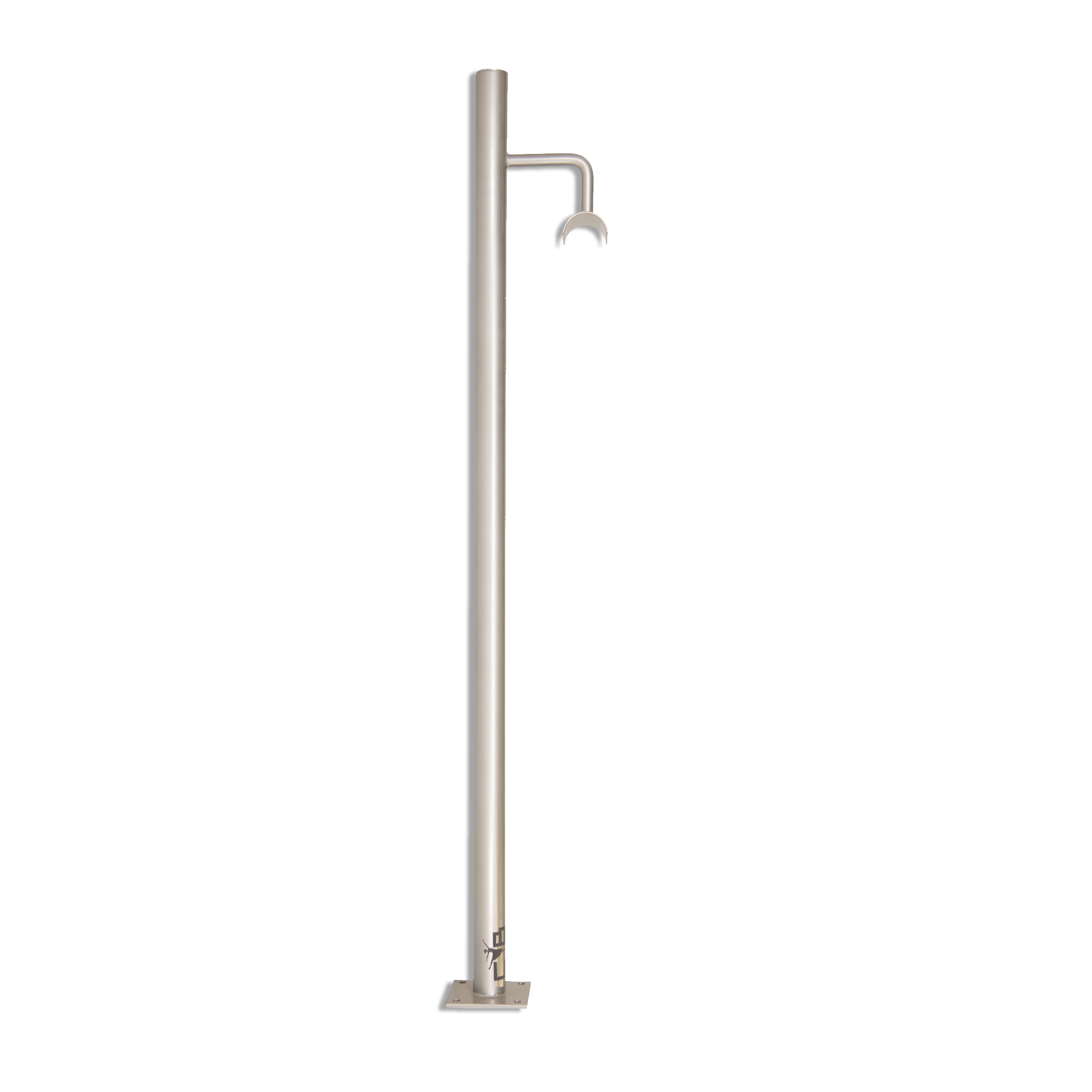
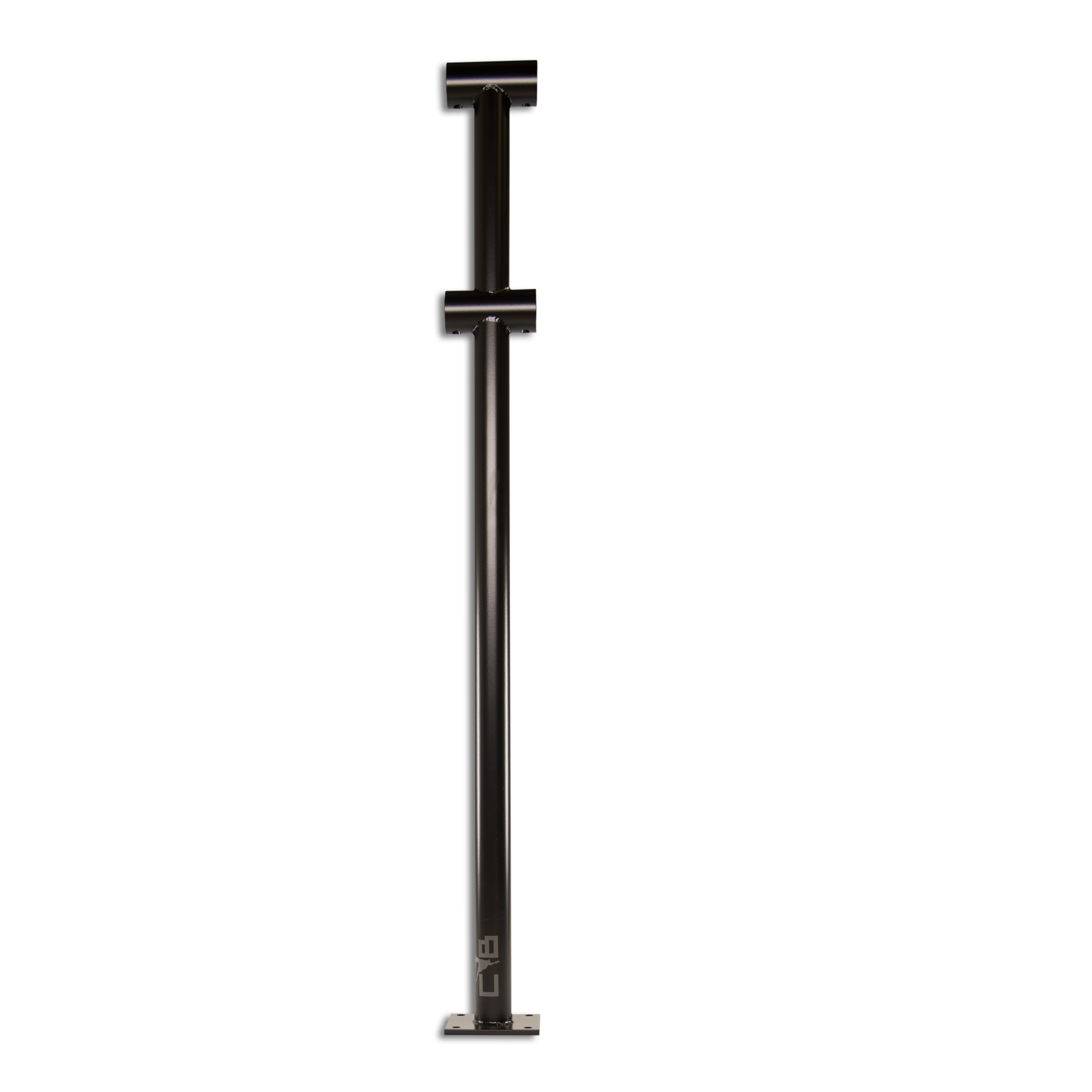
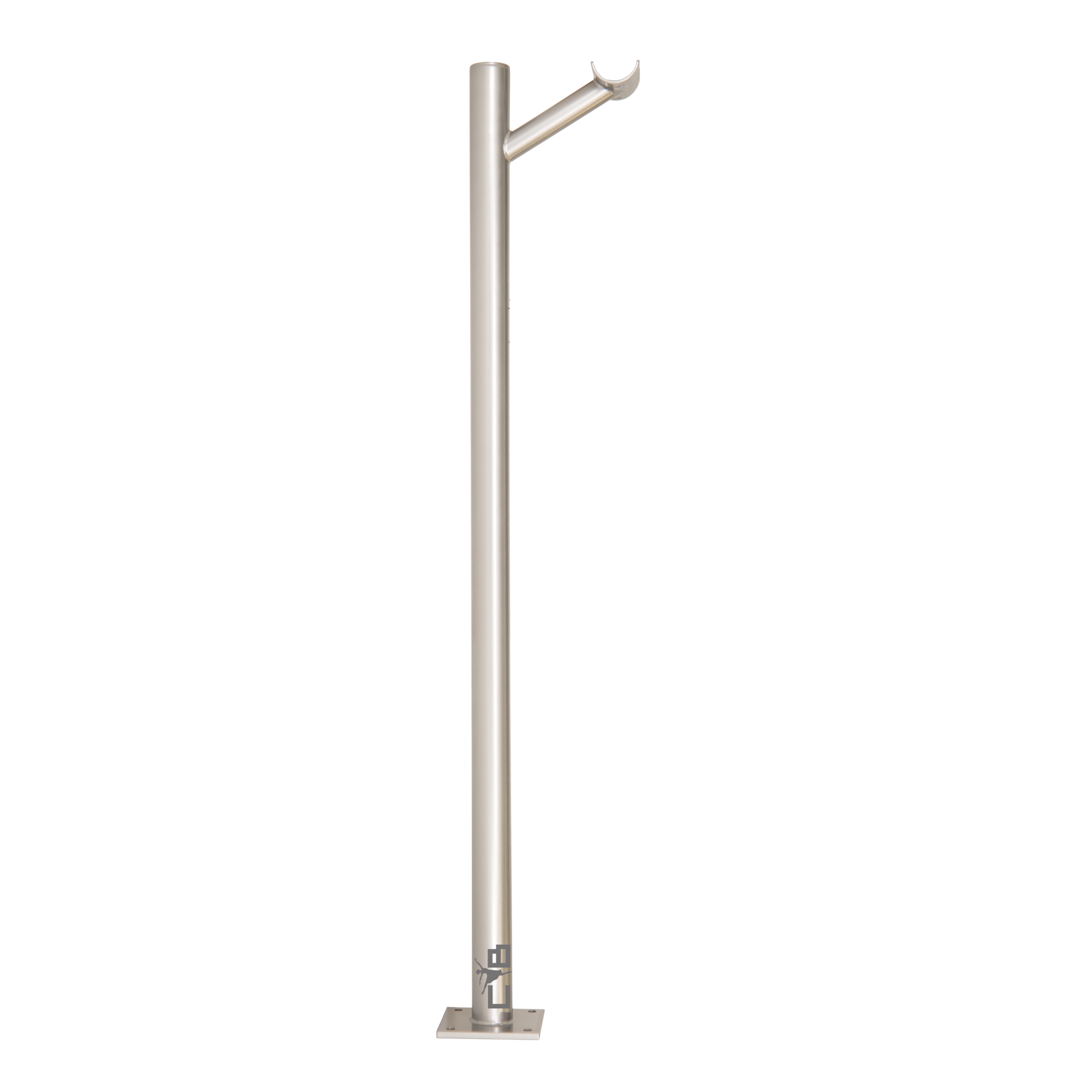
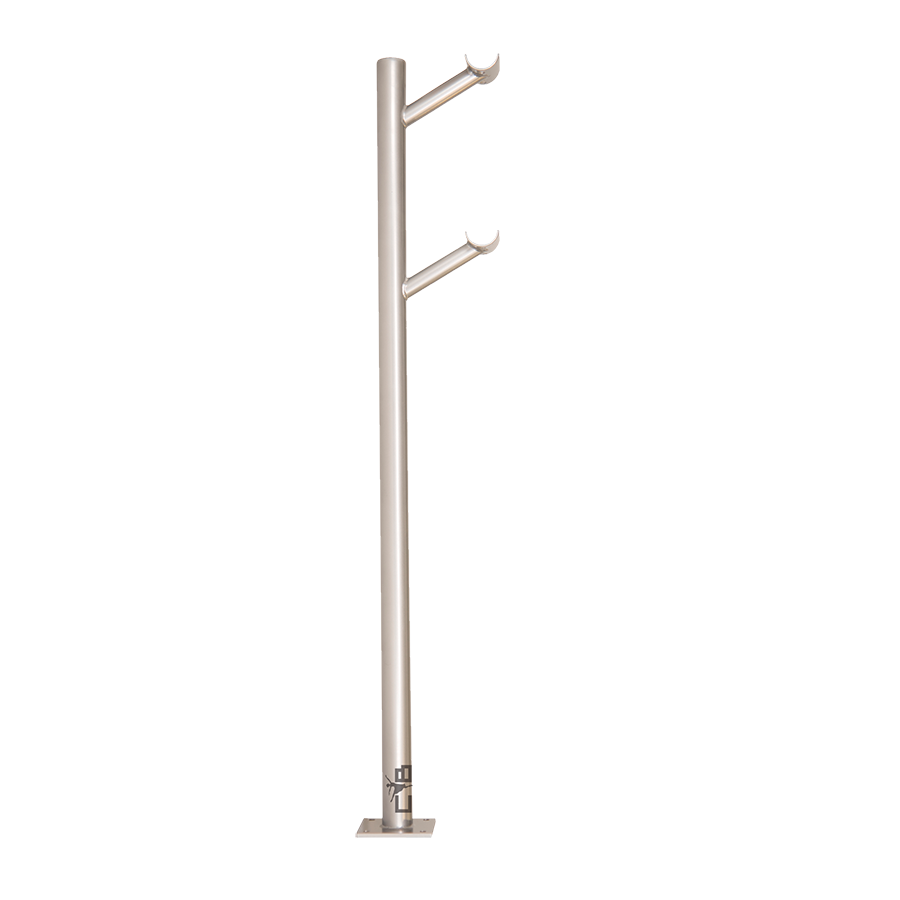
Preliminary design reference for floor-mounted 1-5/8" steel posts. Estimated lateral load capacity depends on post height, spacing, base plate size, anchorage, and proper installation into adequate structural substrate.
Estimated Load Capacity by Post Height and Spacing
Values shown are proportional design estimates derived from the 42-inch baseline and assume consistent material, section properties, base connection, and installation conditions.
| Post Height | 32" Spacing | 48" Spacing | 64" Spacing | Recommended Base Plate |
|---|---|---|---|---|
| 36" | ~438–554 lbs | ~292–350 lbs | ~219–263 lbs | 4" x 4" minimum, 5" x 5" preferred |
| 38" | ~414–525 lbs | ~276–332 lbs | ~208–249 lbs | 4" x 4" minimum, 5" x 5" preferred |
| 40" | ~394–499 lbs | ~263–315 lbs | ~197–236 lbs | 5" x 5" recommended |
| 42" | ~375–475 lbs | ~250–300 lbs | ~188–225 lbs | 5" x 5" to 6" x 6" recommended |
32" Post Spacing
| Post | Load | Plate |
|---|---|---|
| 36" | ~438–554 lbs | 4" x 4"+ |
| 38" | ~414–525 lbs | 4" x 4"+ |
| 40" | ~394–499 lbs | 5" x 5"+ |
| 42" | ~375–475 lbs | 5" x 5"+ |
48" Post Spacing
| Post | Load | Plate |
|---|---|---|
| 36" | ~292–350 lbs | 5" x 5"+ |
| 38" | ~276–332 lbs | 5" x 5"+ |
| 40" | ~263–315 lbs | 5" x 5"+ |
| 42" | ~250–300 lbs | 5" x 5"+ |
64" Post Spacing
| Post | Load | Plate |
|---|---|---|
| 36" | ~219–263 lbs | 6" x 6" recommended |
| 38" | ~208–249 lbs | 6" x 6" recommended |
| 40" | ~197–236 lbs | 6" x 6" recommended |
| 42" | ~188–225 lbs | 6" x 6" recommended |
Base Plate Reference
Why choose a larger base plate?
For floor-mounted 1-5/8" steel posts, a larger base plate improves the stability of the floor connection by increasing bearing area and allowing wider anchor spacing. This helps reduce rocking, improve resistance to rotation, and distribute force more effectively into the floor.
A larger base plate does not make the steel post itself stronger. It improves the stability of the floor connection and helps the system resist lateral forces more effectively.
Base Plate Performance Comparison
Relative comparison based on plate size, bearing area, and approximate anchor geometry for a typical four-anchor layout.
| Base Plate | Plate Area | Area Increase vs 4" x 4" | Approx. Anchor Spread* | Anchor Spread Increase | Relative Stability** |
|---|---|---|---|---|---|
| 4" x 4" | 16 sq in | Baseline | 2.5" | Baseline | Baseline |
| 5" x 5" | 25 sq in | +56% | 3.5" | +40% | About +40% |
| 6" x 6" | 36 sq in | +125% | 4.5" | +80% | About +80% |
What changes as the plate gets larger
- 4" x 4" — compact footprint with less anchor spread and lower resistance to rocking
- 5" x 5" — improved floor stability, better anchor geometry, and better force distribution
- 6" x 6" — greatest resistance to base rotation and the most stable floor connection
Customer-facing summary
- 4" x 4" → 5" x 5" gives 56% more bearing area and about 40% more anchor spread
- 4" x 4" → 6" x 6" gives 125% more bearing area and about 80% more anchor spread
- A larger footprint helps resist rocking, improve load distribution, and reduce stress at the floor attachment
Why larger plates feel more stable
When lateral force is applied to the barre or post, the base connection wants to rock, rotate, and pull harder on one side’s anchors. A larger base plate spreads that force over a greater area and increases the anchor footprint, which helps the post feel more stable and secure.
Important note
These values describe the performance of the base connection, not the steel post alone. Final capacity also depends on slab condition, anchor type, anchor embedment, plate thickness, weld details, post spacing, and applied load height.
Estimated load values are proportional design references for floor-mounted 1-5/8" steel posts and are not a substitute for project-specific engineering review. * Approximate anchor spread assumes a similar edge distance and a four-anchor layout near the plate corners. ** Relative stability is presented as a proportional comparison for the base connection.